Tayata Om Mantra
Tayata Om Bekanze Bekanze Maha Bekanze Radza Samudgate Soha is the mantra of Sangye Menla — the Medicine Buddha (Sanskrit: Bhaisajyaguru). It is one of the most profound healing mantras in Tibetan Buddhist practice. Word by word: Tayata means "thus it is, thus it goes" (an invocatory opener); Om is the universal sound; Bekanze means "eliminating illness/suffering" (from Sanskrit Vaidurya = lapis lazuli); Maha Bekanze is "greatly eliminating"; Radza means "king/supreme"; Samudgate means "perfectly arisen"; Soha (Sanskrit: Svaha) means "may it be so, I offer."
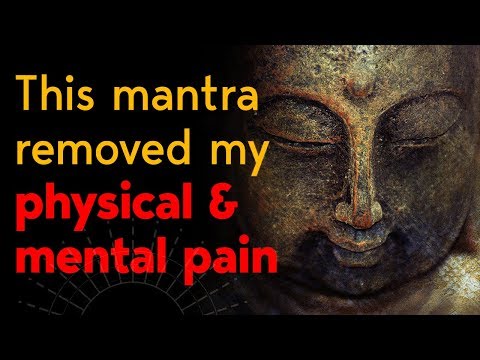
The Medicine Buddha is depicted with lapis-lazuli blue skin — the colour of the luminous mind, clear as the sky. In his left hand he holds a lapis lazuli bowl filled with healing nectar; in his right hand he holds the arura plant (Terminalia chebula, the king of medicinal herbs in Tibetan medicine). His mantra is believed to invoke his healing blessings not only for physical illness but for the deepest illness: ignorance (the misperception of a permanent self that causes all suffering). Healing in this tradition is ultimately spiritual.
The Medicine Buddha Mantra is chanted in Tibetan Buddhist practice for healing self and others, before taking medicine, for those who are dying (to ease the transition), and for purification of karma related to illness. Modern research has documented significant relaxation and pain reduction responses in practitioners during mantra meditation. The mantra can be chanted anywhere, at any time. A traditional practice involves visualising the Medicine Buddha's blue form radiating healing light that permeates the body and mind. Mala of 108 repetitions is standard.
Lyrics
Tayata Om Bekandze Bekandze Mahabekandze Radza Samudgate Soha
Benefits of Tayata Om Mantra
-
Promotes physical healing by purifying karma associated with illness — traditional Tibetan medicine considers disease as having both physical and karmic causes
Source: Sangye Menla Sutra (Medicine Buddha Sutra) — Buddha's description of the 12 vows of the Medicine Buddha
-
Reduces pain and supports recovery when chanted before taking medicine or during medical treatments, as documented in clinical research on mantra meditation
Source: Davidson & Lutz, "Buddha's Brain" (2008) — neurological changes during Buddhist mantra meditation including pain modulation
-
Eases the dying process and supports a conscious transition — the Medicine Buddha mantra is the most important death/dying mantra in Tibetan Buddhist tradition
Source: Tibetan Book of the Dead (Bardo Thodol) — instructions on mantras to chant at the time of death
-
Purifies negative karma that has ripened as illness or obstacles, accelerating healing on all levels simultaneously
Source: Gyushi (Four Tantras of Tibetan Medicine) — the karmic origins of disease and the role of mantra in healing
Frequently Asked Questions
What is the Tayata Om (Medicine Buddha) Mantra?
What are the benefits of chanting the Medicine Buddha Mantra?
Is the Medicine Buddha Mantra Buddhist or Hindu?
How do I chant the Tayata Om Mantra correctly?
Can I chant the Medicine Buddha Mantra for someone else who is ill?
🪘
Join the Daily Chanting
Live mantra sessions every morning. Free to join. 5,000+ practitioners.
Join Free →